
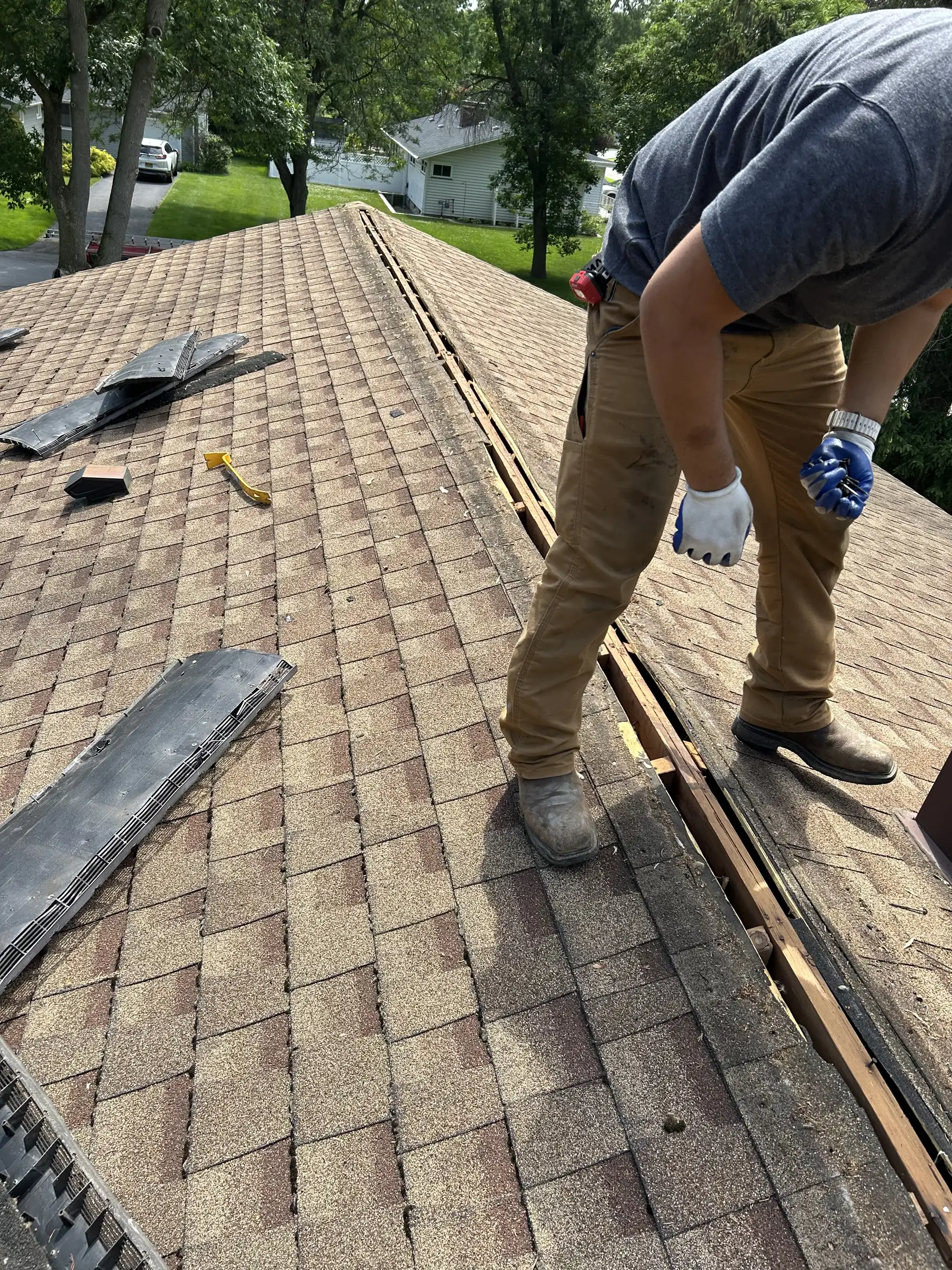
It usually starts around 5 in the morning. Something is moving above the bedroom ceiling, and by the third night you know it isn't the house settling.
If that sounds familiar, you're probably looking into wildlife removal in Greenville, SC. This guide walks through how the job actually works, what a good company should do at each step, and why getting the animal out is only half of it.
What does wildlife removal in Greenville include?
Real wildlife removal has four parts: an inspection, getting the animal out, sealing the way it got in, and repairing what it damaged. If a company only does the second part, the problem usually comes back.
Most calls we get in Greenville County involve squirrels, raccoons, opossums or bats. Each one gets in differently and needs a different plan, which is why the inspection matters so much.
You can see everything that goes into the job on our wildlife repair and removal service page.
Why Greenville homes are easy targets
Greenville has a lot of mature trees close to houses, and that gives animals a free ladder to the roof. Neighborhoods like Overbrook, Augusta Road and North Main have big hardwoods that hang right over rooflines.
Older homes add another layer. Wood soffits, fascia boards and gable vents loosen over decades, and a squirrel only needs a small gap to start chewing it bigger.
Newer builds aren't immune either. Roof returns, where two rooflines meet, often leave small openings that builders never closed.
Step by step: how a removal job goes
A proper job follows the same order every time. Skipping a step, or doing them out of order, is how animals get trapped inside or come right back.
- Inspection. We walk the whole outside of the house, from the foundation and crawl space vents to the roofline, then check the attic.
- Identify the animal. Droppings, tracks, chew marks and the time of day you hear noise tell us what we're dealing with.
- Find every entry point. Not just the main hole. Animals often have a backup way in.
- Remove the animal. Depending on the species, that might mean a one way door that lets it leave but not return, or trapping.
- Seal the openings. Gaps get closed with materials the animal can't chew through.
- Repair the damage. Chewed wood, torn vents and soiled insulation get fixed or replaced.
- Follow up. We check that nothing is still getting in.
If you want to know what the warning signs look like before you call, our guide to scratching noises in your walls at night breaks it down by sound and time of day.
Removal methods compared
There are a few ways to get an animal out, and they aren't equal. The right one depends on the animal and whether there could be babies inside.
| Method | How it works | Best for | Watch out for |
|---|---|---|---|
| One way door | Animal leaves on its own and can't get back in | Squirrels and bats with one main entry | Must go on after all other gaps are sealed |
| Live trapping | Cage trap set at or near the entry | Raccoons and opossums | Rules on handling and relocating wildlife apply |
| Hand removal | Animals or young are taken out by hand | Litters found in the attic | Needs gloves, care and the right timing |
| Repellents alone | Smell or sound meant to drive animals away | Rarely a fix by itself | Animals often get used to them |
Why sealing the entry matters more than trapping
Sealing is what keeps the problem from coming back. An animal that nested in your attic leaves a scent trail, and other animals follow it to the same opening.
That's why we put so much weight on exclusion. We'd rather spend an extra hour on the roofline closing a gap at a roof return than come back in six weeks for the next squirrel.
Every repair we make is warrantied. If something gets back in through a spot we sealed, we come back and fix it.
What the damage usually looks like
The most common damage is to insulation, wood trim and wiring. Animals flatten and soil insulation, chew fascia and soffit boards, and gnaw on wire coating.
Chewed wiring is the one we take most seriously, since bare wire in a dry attic is a fire risk. Droppings and urine also soak into insulation and leave a smell that won't go away until the insulation is replaced.
Our wildlife damage repair service covers all of this, from new soffit and vent covers to insulation cleanup.
How long does it take?
Most jobs take anywhere from a few days to a couple of weeks from inspection to final repair. The removal part is often the slowest, because you have to wait for every animal to leave.
Sealing and repairs are usually quicker. A simple roofline repair can be done in a visit, while a bigger attic cleanup takes longer.
Signs you need wildlife removal now
Call right away if you hear crying or chirping, smell something dead, or see chewed wires. Those point to babies, a trapped animal or a fire risk.
Other signs can wait a day or two but shouldn't wait weeks. Droppings in the attic, a new hole at the roofline, or dark rub marks around a vent all mean an animal is coming and going.
Bats deserve extra care. They often roost in groups, and timing matters when young can't fly yet, so removal has to be planned around that.
Raccoons are the strongest of the bunch. A raccoon can rip open a soffit or pull up shingles in one night, so a sudden new hole near the gutters is a reason to call quickly.
What you can do before we arrive
Keep pets and kids out of the attic and away from any opening. Don't try to block the hole yet.
Write down when you hear noise and where it seems to come from. Take photos of any holes or damage you can see from the ground. That information helps us plan the job faster during the free inspection.
Bring pet food inside and close trash cans tightly. Removing easy food makes the animal less interested in sticking around while we work.
Serving Greenville and the towns around it
We're based right here in Greenville, so we're close whether you're in Downtown Greenville, the West End or out past Mauldin and Simpsonville. Read more about how we work locally on our Greenville, SC service area page.
Call us at 864-364-0580 or request a free inspection and we'll come take a look.
Frequently asked questions
- Do you remove animals from attics in Greenville, SC?
- Yes. Attics are where most of our Greenville calls start. We inspect, remove the animal, seal the entry points and repair the damage.
- Is the inspection really free?
- Yes, the inspection is free. We'll tell you what we found, what animal it likely is, and what it will take to fix it before any work starts.
- Will the animals come back after you leave?
- Not through the openings we seal. Our repairs are warrantied, so if something gets back in through a spot we closed, we come back and make it right.
- Can I just set a trap myself?
- You can, but trapping doesn't close the hole, and the next animal will find it. You also risk trapping a mother and leaving young behind in the attic, which creates a worse problem.
- What animals do you deal with most?
- Squirrels, raccoons, opossums and bats make up most of our work. Each one gets into a house a little differently, so the plan changes based on what we find.